What Type of Cloud Is This?——Cloud Identifier Online
Upload a sky photo for instant cloud identification and classification with AI. Learn cloud types (cumulus, stratus, cirrus, and more) and cloud species, typical weather, altitude, and formation—perfect for students, photographers, and weather enthusiasts.
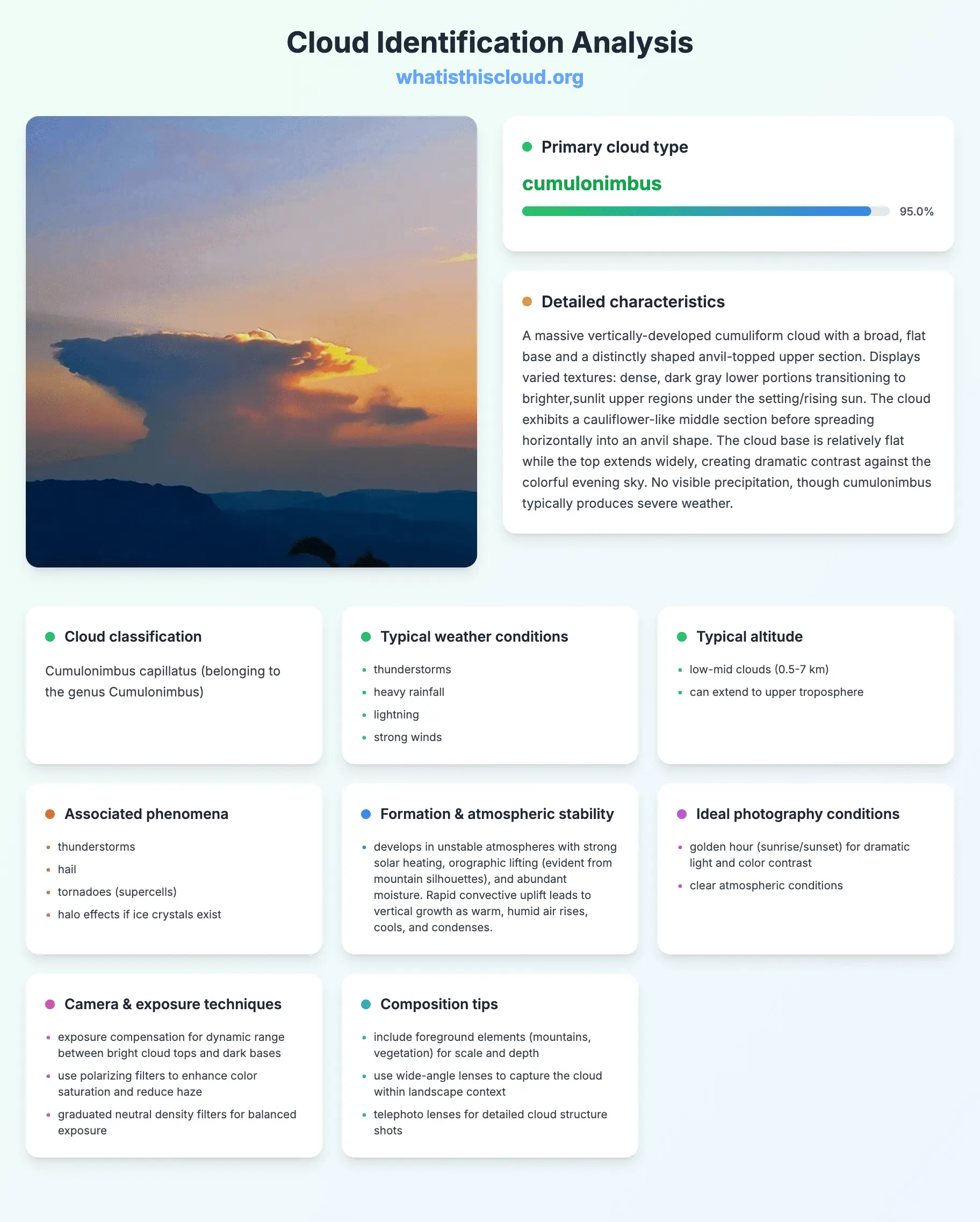
ALL Cloud Types

Cumulus
Scattered, fluffy cloud formations with distinct rounded outlines and flat bases. The clouds exhibit a light grayish-white coloration, with varying sizes and shapes. No precipitation is observed; cloud tops show slight vertical development while maintaining horizontal flatness at their bases. They are distributed across a predominantly clear blue sky.
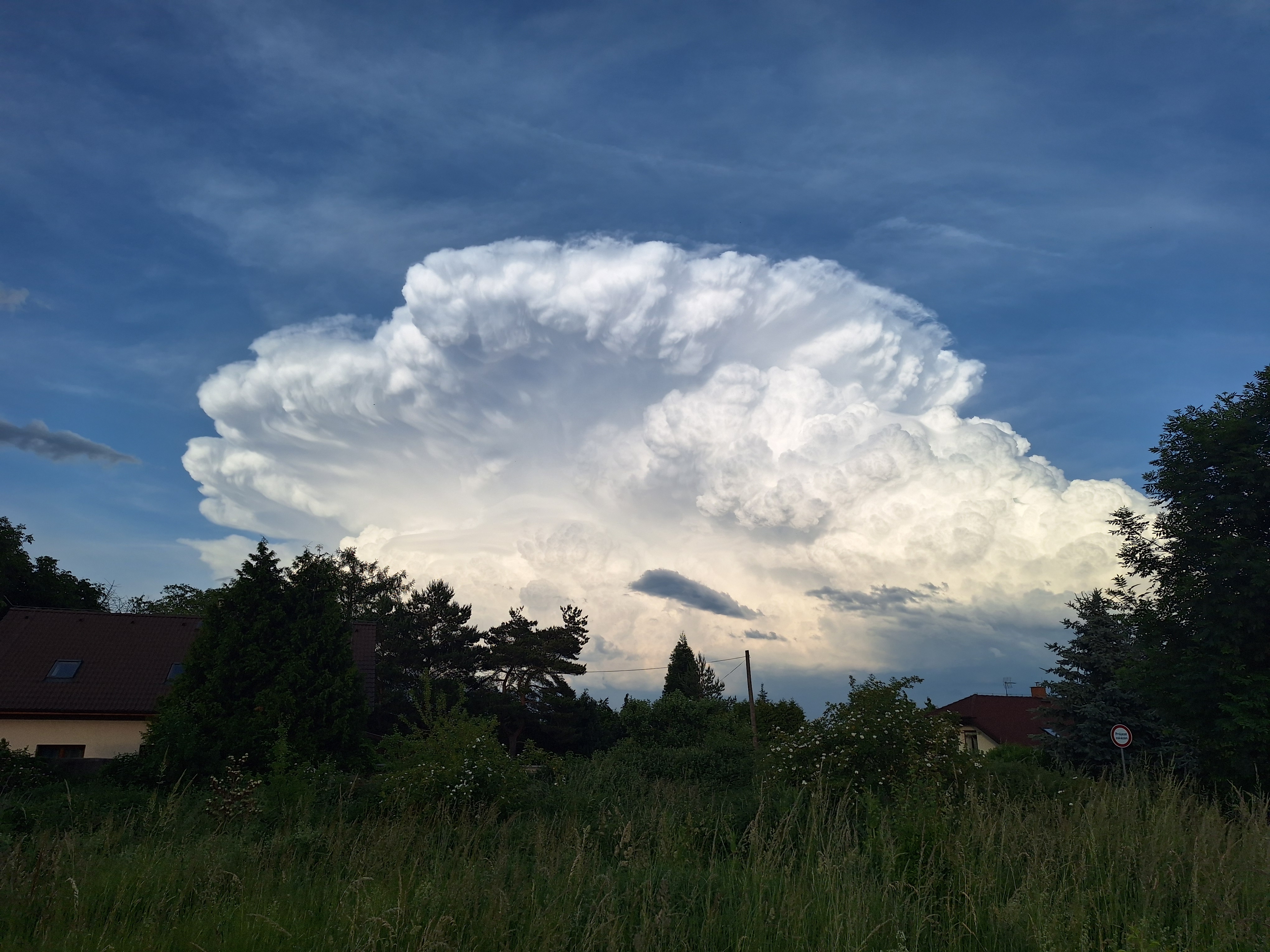
Cumulonimbus
A massive, vertically-developed cumulonimbus cloud displaying significant vertical extent with billowing, textured surface features. The cloud exhibits brilliant white, dense upper portions transitioning to slightly grayer lower regions. Distinctive anvil-shaped cloud top indicates mature thunderstorm development. The base shows moderate elevation with defined boundaries. The cloud displays excellent contrast against clear blue sky.

Cirrus
Wispy, hair-like cloud formations with feathery textures and high altitude positioning. Primarily white with subtle gray shading where thicker cloud areas appear. Shows excellent transparency allowing sunlight to filter through creating sunbeams effect. Cloud tops are sharply defined against blue sky background. No precipitation visible.

Stratocumulus
Large, rounded cloud masses with slight undulations along their horizontal base, displaying a mix of light gray and white hues. The cloud structure shows variegation (distinct separation between cloud elements) rather than complete coverage. Clouds exhibit moderate thickness without significant vertical development, and there is no visible precipitation or halo/iridescence phenomena. The cloud tops are softly rounded, while the base maintains a slightly irregular, wave-like pattern.

Nimbostratus
The cloud exhibits a thick, continuous gray cover spanning most of the sky. It has a relatively uniform gray tone with subtle variations in shading, particularly darker patches indicating high moisture content. The cloud lacks distinct vertical development or sharp outlines, appearing as a layered structure with slightly undulating textures. There is no visible precipitation in the image, but its dense nature suggests potential for steady rainfall. Cloud bases are not sharply defined, blending into the surrounding cloud mass.
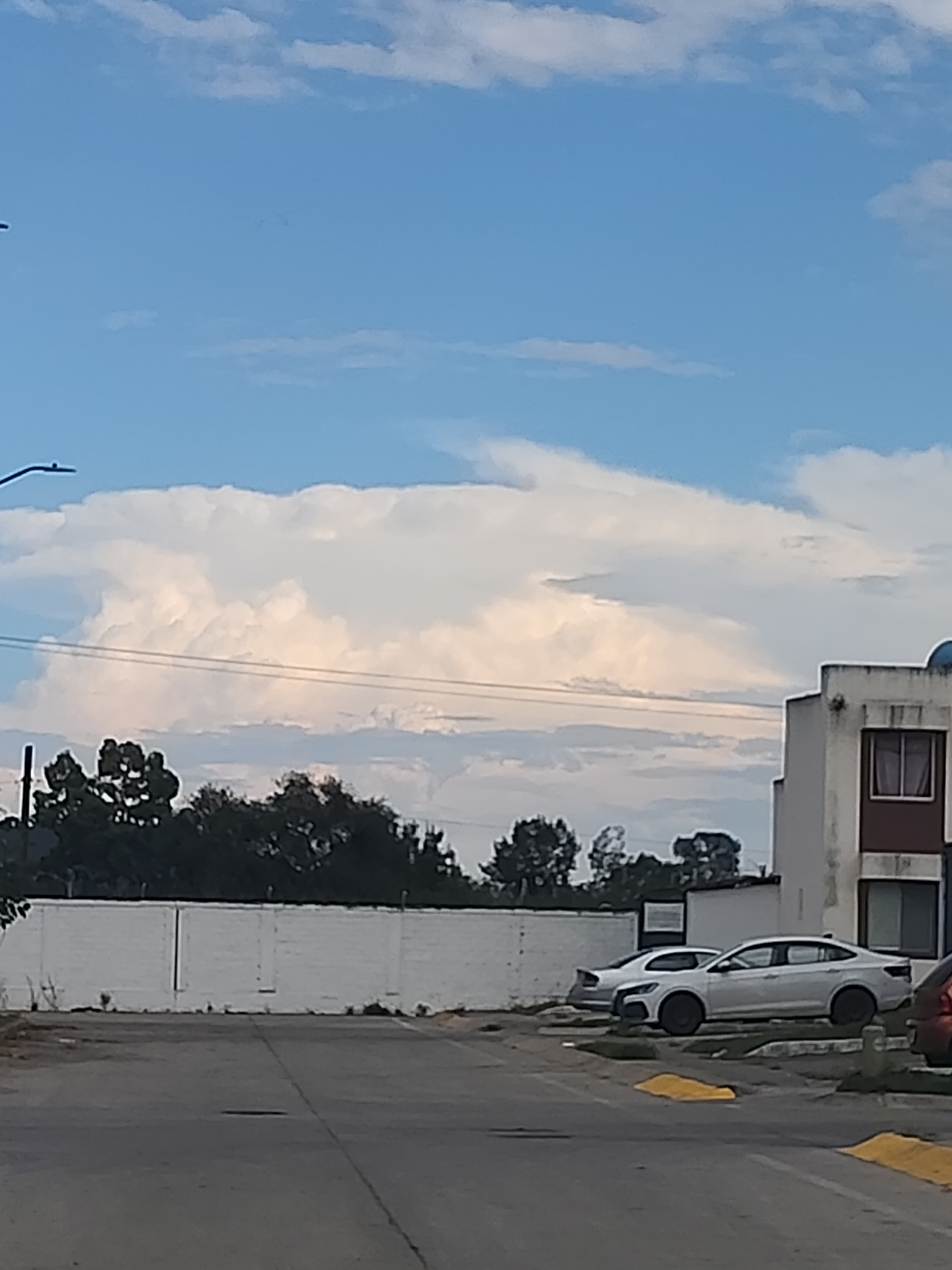
Cumulus congestus
Large, vertically developed cumulus cloud with substantial vertical extension and rounded, cauliflower-like tops. Primarily white with subtle gray shading where sunlight is filtered through. Has a relatively flat base with upward projections indicating strong convection currents; no visible precipitation or halo phenomena observed.
Trusted for sky & weather learning
Why use our cloud identification tool?
Built for cloud classification, weather literacy, and great sky photos
AI cloud recognition
Models trained to distinguish major cloud genera and species from real sky photos for reliable identification
Instant classification
Get cloud type, structure hints, and context in seconds—ideal for field checks and homework
Meteorology-aware
Relates each type to typical weather, altitude bands, and formation—aligned with cloud atlas concepts
Free tier
Try cloud identification without a subscription; upgrade when you need more credits
Mobile friendly
Use your phone camera on the go—works on phones, tablets, and desktop browsers
Rich explanations
Learn characteristics, photography tips, and what the clouds may mean for upcoming weather
How cloud identification & classification works
Upload a sky of cloud photo
Upload or capture an image that shows the clouds clearly against the sky.
AI analysis
Our model evaluates shape, texture, height cues, and context to suggest the most likely cloud types.
Read your report
Review classification, similar types, typical weather, altitude, and tips for better sky photography.
Frequently asked questions: cloud identification & classification
What is cloud identification and how does classification work here?
Cloud identification names what you see in the sky (for example cumulus or cirrus). Classification follows meteorological schemes such as genera, species, and varieties based on shape, height, and structure. Upload a clear sky photo and our AI suggests the best-matching types with plain-language explanations.
How accurate is AI cloud identification?
Accuracy depends on photo quality, lighting, and how typical the scene is. Clear edges, natural color, and enough sky context help the model separate similar layers (e.g., stratus vs. nimbostratus). Treat results as educational guidance, not a substitute for official forecasts or aviation weather briefings.
Is this tool free to use?
You can start on a free tier with limited analyses; Pro adds more credits for frequent cloud identification and classification. Check the pricing page for current limits.
Which cloud types can you identify?
The system is oriented toward major genera and common species—cumulus, stratus, stratocumulus, altocumulus, altostratus, nimbostratus, cirrus, cirrocumulus, cirrostratus, cumulonimbus, and related variants when visible in the image.
What makes a good photo for cloud identification?
Use daylight when possible, avoid a blown-out sky, and include enough cloud structure (base, top, or layer texture). Wide shots often beat tiny crops; note if the sun is behind the cloud, which can silhouette features useful for classification.
Can I use it on my phone?
Yes. The site is responsive—take a photo with your camera, upload it, and review identification and classification on the spot or after your walk.